Friday, April 27, 2007

Join Peace Patriots at Faneuil Hall to Impeach Bush & Cheney
Click on link below!

IMPEACHMENT ACTIVITY SAT APRIL 28th BOSTON


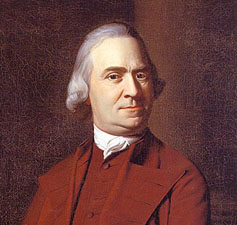
Samuel Adams
American Patriot & Politician

1722 - 1803

" If ye love wealth greater than liberty, the tranquility of servitude greater than the animating contest for freedom, go home from us in peace. We seek not your counsel, nor your arms. Crouch down and lick the hand that feeds you; May your chains set lightly upon you, and may posterity forget that ye were our countrymen. "

—Samuel Adams


Howdy Folks,

It Friday morning, so I am on my way up to Boston to meet with (*)Dave Swanson, and (**)Elloitt Adams, VFP President, and decedent of President's John Adams, and Boston Patriot, Samuel Adams.
We have invited theses folks to speak at Faneuil Hall tomorrow. I am wondering who may have the CCPJ megaphone? I will be staying with Carlos & Melida tonight and will be with my friend Pat Scanlon, VFP tomorrow at the rally. Call me at (508) 432-0545 or in Boston (617) 323-5623! Come on up!


OpEdNews


April 26, 2007

The GE Democratic Presidential Debate

By David Swanson

MSNBC, owned by weapons-maker General Electric, opened Thursday night's debate with the unavoidable topic of Iraq, and unavoidably allowed each of the eight candidates on the stage to address it. Two of them, Congressman Dennis Kucinich and former Senator Mike Gravel, spoke in favor of ending the war. Kucinich advocated cutting off the funding. Gravel proposed passing a law to make it a felony to remain in Iraq.


Of course, it's also a felony to spy in violation of FISA, to mislead Congress into war, to expose an undercover agent, etc., etc. And, of course, Bush and Cheney can find money at the Pentagon to continue an unfunded war. But Kucinich and Gravel were serious about trying to rein in this White House. The other six Democrats on the stage Thursday night (Joe Biden, Bill Richardson, Chris Dodd, Hillary Clinton, Barack Obama, John Edwards) made clear that they oppose serious steps to force a swift end to the war. They would prefer to end the war as president, regardless of who has to die in the meantime, and heedless of the failure of such waffling to win elections in the past.


GE spokesman Brian Williams directed the debate and turned it next to scandal questions, asking each candidate a different question about some accusation of wrong doing. Most of the candidates blatantly refused to answer the questions and simply changed the subject. Asked if he could be trusted not to make regrettable comments, Biden gave the one-word answer "Yes."


Amazingly, Williams could come up with nothing to accuse Kucinich of. "You were against the war before being anti-war was popular," he said. "Why do you think you don't have more traction?" Kucinich gave an optimistic response on gaining traction. He may very well be right that he is gaining traction. But I wonder if his answer would have been different had this question come at the end of the debate, because Williams answered his own question by proceeding with much of the debate as if Kucinich and Gravel were not on the stage. One factor that may have encouraged GE in this, at least in the extreme nature of the imbalance it pursued, may have been that Gravel, an alumnus of Camp Democracy http://www.campdemocracy.org took his turn on the scandals questions and simply kicked ass. He said he was embarrassed by the current Congress and that some of the candidates scared him, especially by their refusal to oppose any nuclear attack on Iran. Gravel did not quite fill the role of Al Sharpton in last season's debates, but he appeared to speak with great off-the-cuff uncalculated honesty, putting the pro-war candidates in their place. GE immediately put him in his, and when he got a chance to speak much later he said he was beginning to feel like a potted plant on stage.


The next series of questions were about domestic policy, and focused largely on divisive issues like abortion. GE skipped Kucinich and Gravel. Then came health care question, which skipped Kucinich and Gravel. Clinton, who throughout the debate seemed the most ill at ease and the most unwilling to say anything substantive, gave an interesting account of her failed effort at health care reform as first lady. She said that people originally supported her plan, but that their view of it soured after she'd let the insurance companies and the pharmaceutical companies work on it. From this, as from her vote for the Iraq War, she drew no lessons. She would again allow the insurance companies to continue to exist and to draft her plan, but she would go into the process with more pessimism. (You and the rest of us, Hillary!)


GE next asked each Democrat what the worst mistake was they'd ever made. This was not terribly enlightening, except perhaps by comparison to the upcoming Republican debate in which GE will likely ask the candidates what the worst mistakes are that Democrats have ever made.


Then candidates got a variety of different issue questions, including right-wing phrasing like "illegal aliens." In this round, former Senator Edwards was asked to criticize oil companies' profiteering and refused. Gravel was skipped. And Kucinich was finally called on, about health care. He was given about 20 seconds but nailed it. The plan that he and Congressman John Conyers have put forward for single-payer health care cuts through all of the bluster and bombast (to use an Obama phrase) of the other candidates, who have by now reached the point of warning each other that their band aids won't repair severed limbs.


Next came a series of questions about "non-Iraq foreign policy." Obama was asked to name three allies and only got to two (Europe and Japan) before proposing to use the military to relate well to China. Williams accused Obama of having said that the Palestinian people are suffering, and Obama assured him that he meant they were only suffering from their own leaders' failures and that Israel is not to blame.


This time around, Kucinich was skipped but Gravel was called on. GE asked him to name three enemies. He replied that it was absurd to think we had any enemies while we spend as much on our military as all other nations combined. "Who are you afraid of, Brian?" he asked the nearest representative of the military industrial complex, which he accused of running not only the government, but also "our culture."


Williams asked the candidates to raise their hands if they believed there was such a thing as a "global war on terror." Kucinich's hand was one of the few or the only one (MSNBC.com's video does not do as well as its audio, so I couldn't see) not raised, so Williams asked him to explain. He said that the phrase "global war on terror" has been used as a pretext for aggressive war. Kucinich then went back and answered one of the questions he'd been skipped on – that of enemies and allies – and concluded by putting at the top of his agenda brokering Israeli-Palestinian peace in an even-handed manner.


Kucinich got to answer one other question as well. Williams asked which candidates supported impeaching Dick Cheney. Kucinich's hand was the only one, or one of the few, raised (again, I couldn't see, but I'm guessing Gravel raised his hand too).


Kucinich raised a copy of the Constitution and spoke of his duty to uphold it. He said that the country had been taken into war on the basis of lies, and that the administration was threatening to do the same on Iran. Sadly, the audience had been strictly forbidden to applaud during the debate. (GE claims to ban clapping to save time, but it would save more time by turning off Richardson's microphone each time he runs over his assigned time limit just clearing his throat. And the debates would be better to watch if some segment of the public were involved.) There was no ban on applause at an event where Kucinich spoke the day before.


Here's video: http://www.afterdowningstreet.org/node/21806


Then several candidates got new random questions: gay marriage, Cuba, the climate. Even Gravel got a question, on nuclear energy. Kucinich, who was skipped, raised his hand during Obama's turn to challenge the Illinois Senator on his refusal to oppose nuking Iran. Gravel jumped into the exchange as well. But Obama refused to take the option of aggressively nuking another nation off the table.


And that was it, until the post-debate spin room. GE did not ask about the budget or wages or the right to organize.


There were, quite stunningly, no questions about which of the new presidential powers these candidates would use if elected. Would you, as president, spy on your political opponents without court warrants? Would you detain people without charge? Would you use any secret prisons? Would you torture? Would you disobey laws? Which ones? Would you announce your intentions in "signing statements"? Would you engage in any aggressive wars? Would you launch any wars not declared by Congress? Would you ever intentionally mislead Congress? Would you lie to the public about matters as grave as hurricanes, wars, and spying? None of these topics came up.


Plenty of accusations against Democrats did arise. Why, Williams wanted to know, are Democrats labeled as less able to protect us? Well, they aren't in polls, but they are by weapons makers. Williams asked what these candidates would do in response to an event like 9/11, but he didn't ask that simple question. He asked how they would use the military overseas to respond to an attack like 9-11. The candidates who got that question did not challenge its unstated assumptions. Clinton, in particular, sounded exactly like Bush. And Biden, who was not asked this question but jumped in to answer it later, sounded worse.

____________________________________________________________________________________________________________

(*)David Swanson is the Washington Director of Democrats.com and AfterDowningStreet.org Progressive Democrats of America , and of the Backbone Campaign. He serves on a working group of United for Peace and Justice. He has worked as a newspaper reporter and as a communications director, with jobs including Press Secretary for Dennis Kucinich's 2004 presidential campaign. His website is www.davidswanson.org. In April 2007, Swanson began consulting part-time for Kucinich for President 2008.


Authors Website:
http://www.davidswanson.org

Authors Bio: DAVID SWANSON is a co-founder of After Downing Street, a writer and activist, and the Washington Director of Democrats.com. He is a board member of Progressive Democrats of America, and serves on the Executive Council of the Washington-Baltimore Newspaper Guild, TNG-CWA. He has worked as a newspaper reporter and as a communications director, with jobs including Press Secretary for Dennis Kucinich's 2004 presidential campaign, Media Coordinator for the International Labor Communications Association, and three years as Communications Coordinator for ACORN, the Association of Community Organizations for Reform Now. Swanson obtained a Master's degree in philosophy from the University of Virginia in 1997.
--

(**) Veterans for Peace President: Elliott Adams
Elliott Adams was a paratrooper in the infantry serving in Viet Nam, Japan, Korea, and Alaska.Elliott has been active in Veterans For Peace, his local Chapter (#10, Albany, NY) as well as regionally and nationally. He's worked with IVAW. Elliott has stepped forward bringing all of his experience and passion to the work of VFP, including attending the last three Board meetings, being one of the finalists for the Executive Director position and creating and filling the VFP Nonviolence Training Coordinator position. He is a decedent of US President John Adams & US Revolutionary Samuel Adams.


Hope to see you on the road towards peace.
John Bangert,
Progressive Democrats & Peace Community


Not one more dime!
Not one more day!
Not one more death !
Bring Our Troops Home Now!

Wednesday, February 21, 2007

Who’s Running?

Some notable names in the field of potential presidential candidates:

DEMOCRATS

OFFICIALLY ANNOUNCED
Senator Joseph R. Biden Jr. of Delaware
Senator Hillary Rodham Clinton of New York
Senator Christopher J. Dodd of Connecticut
John Edwards, former senator from North Carolina
Mike Gravel, former senator from Alaska
Representative Dennis J. Kucinich of Ohio
Senator Barack Obama of Illinois
Tom Vilsack, former governor of Iowa

ESTABLISHING EXPLORATORY COMMITTEES
Gov. Bill Richardson of New Mexico

WIDELY MENTIONED
Al Gore, former vice president; from Tennessee
Gen. Wesley Clark, retired NATO commander; from Arkansas

OFFICIALLY NOT RUNNING
Senator John Kerry of Massachusetts
Senator Evan Bayh of Indiana
Senator Russell D. Feingold of Wisconsin
Mark Warner, former governor of Virginia

REPUBLICANS

OFFICIALLY ANNOUNCED
Senator Sam Brownback of Kansas
Representative Duncan Hunter of California
Rudolph W. Giuliani, former mayor of New York
Mitt Romney, former governor of Massachusetts

ESTABLISHING EXPLORATORY COMMITTEES
Mike Huckabee, former governor of Arkansas
Senator John McCain of Arizona
Tommy G. Thompson, former governor of Wisconsin
James S. Gilmore III, former governor of Virginia
Representative Tom Tancredo of Colorado
Representative Ron Paul of Texas

WIDELY MENTIONED
Senator Chuck Hagel of Nebraska
Gov. George E. Pataki of New York
Newt Gingrich, former House speaker from Georgia

OFFICIALLY NOT RUNNING
Senator Bill Frist of Tennessee

Tips

To find reference information about the words used in this article, double-click on any word, phrase or name. A new window will open with a dictionary definition or encyclopedia entry.

Senator Clinton Pressured on Iraq


February 21, 2007

NY Times

By PATRICK HEALY

CARSON CITY, Nev., Feb. 21 — Two Democratic presidential rivals of Senator Hillary Rodham Clinton applied more pressure to her over Iraq today, extolling the virtue of admitting mistakes about the war — which she has not done — and comparing politicians who do not to President Bush.

The toughest words, made here at the first Democratic candidate forum of the 2008 race, came from former Senator John Edwards of North Carolina. He said that Americans needed “a different kind of leadership” from a president who, Mr. Edwards said, had refused to admit errors on Iraq. Mr. Edwards has apologized for his 2002 vote to authorize military action in Iraq; Mrs. Clinton cast the same vote and has stood by it while also criticizing the war strategy.

“We need a leader who will be open and honest with you and with the American people — who will tell the truth, who will tell the truth when they’ve made a mistake, who will take responsibility when they’ve made a mistake,” Mr. Edwards said.

“If we want to live in a moral and just America and we want America to be able to lead in a moral and just world, we need a leader who is honest, open and decent,” he added.

Asked by the forum’s moderator, George Stephanopoulus of ABC News, about Mrs. Clinton’s explanation that her vote was cast sincerely based on military intelligence at the time, Mr. Edwards replied: “Whether it’s good enough I think is between her and her conscience — it’s not for me to judge.”

Another candidate, Senator Christopher Dodd of Connecticut, who has also renounced his 2002 vote, said there was “nothing wrong” with admitting mistakes.

“There are two things that people in public life — two responses people in public life never like to give, and I don’t understand why: ‘I made a mistake’ and ‘I don’t know,’ ” Mr. Dodd said. “I’ve made them in the past, I’ll make them in the future.”

Because the forum rules prevented direct engagement among the candidates — indeed, they only appeared on the stage one after another — Mrs. Clinton was inhibited from responding immediately. Once it was her turn, she reiterated her opposition to the war and outlined her new plan to cap troop levels and start withdrawing some units from Iraq within 90 days.

If the president does not move in her direction, she added, “I think we should require that he has to seek additional congressional authority, because it has run out on what George Bush has tried to do in Iraq.”

Of the major Democratic candidates, only Senator Barack Obama of Illinois was absent; he was campaigning in Iowa. Yet he was here in spirit — at times the focus of the forum, and of some reporters, drifted to the e-mail attacks today between the campaign war rooms of Mrs. Clinton and Mr. Obama over an Obama donor’s personal criticism of the Clintons this week.

Mr. Geffen, in an interview with a columnist for the New York Times, described Mrs. Clinton as “incredibly polarizing” and “ambitious,” and also said Mr. Clinton might make trouble for his wife’s campaign by causing a new scandal in their lives.

Mrs. Clinton, when asked at the forum if Mr. Obama should denounce Mr. Geffen’s remarks, said: “I want to run a very positive campaign, and I sure don’t want Democrats or the supporters of Democrats to be engaging in the politics of personal destruction. I think we should stay focused on what we’re going to do for America.” She added, to strong applause, “And you know, I believe Bill Clinton was a good president, and I’m very proud of the record of his two terms.”

When pressed, she said she would leave it up to the Obama campaign to make its decision on Mr. Geffen, and then noted that she was “excited” to be in Nevada “with the other candidates who came” — a comment that only drew attention to Mr. Obama’s decision to skip the event.

The Geffen remarks bubbled up throughout the forum: One candidate, former Gov. Tom Vilsack of Iowa, joked about being “polite” to Mrs. Clinton, while another, Gov. Bill Richardson of New Mexico, said Mr. Obama should denounce Mr. Geffen’s remarks.

“If we’re going to win, we have to be positive,” Mr. Richardson said. “I think these name-callings are not good. I don’t know Mr. Geffen. I don’t know what was said. I was actually studying for this presentation, so I didn’t see all the news,” he added, to laughter.

Mr. Richardson and another candidate, Senator Joseph Biden of Delaware, also used the Geffen flap to call on the Democratic field to forswear negative campaigning.

Not everyone seemed to agree with that. Outside of the event here in the state capital of Nevada — which is scheduled to hold the second round of presidential caucuses next January — leaflets attacking Mrs. Clinton as unelectable were tucked under the windshield wipers of cars. The leaflets, of unknown provenance, were titled “Why Can’t She Win?” and cast her as unlikable among liberals (over the war) and conservatives (over just about everything).

Other than Iraq, health care insurance received the greatest discussion among the candidates, with most of them promising to enact universal health coverage. Mr. Richardson pledged that he would not increase taxes to expand health care, but rather focus on preventative care, while Mr. Edwards repeated his plans for a massive health care program that would include higher taxes on wealthy Americans.

“I think we have reached a place in American history where small baby steps, incremental steps are not enough — we need big, transformational change,” he said to some applause.

Mrs. Clinton, who has been portrayed by Edwards advisers and others as an incrementalist, said she wanted to develop a plan to provide universal care without spending billions of dollars more, given that the United States already spends hundreds of billions more on health care than any other nation.

Yet she also presented herself as a bold goal-setter, recalling President John F. Kennedy’s pledge to put a man on the moon in a decade.

“I want to have universal health care coverage by the end of my second term, and with everybody working on that I think we can do it,” she said to applause.


Edwards Needles Clinton About Iraq Vote

By BETH FOUHY

CARSON CITY, Nev. - Former Sen. John Edwards jabbed gently at Sen. Hillary Rodham Clinton on Wednesday in the first all-candidates forum of the 2008 Democratic presidential campaign, saying her refusal to disavow a 2002 vote on Iraq was "between her and her conscience."

"It's not for me to judge," said Edwards, who _ like Clinton _ voted in 2002 to authorize the invasion of Iraq, but unlike her, has since apologized for his vote.

The event format did not permit Clinton to respond to Edwards' swipe, which stood out on an afternoon in which Democrats launched serial attacks on President Bush's war policies.

"The worst we can do is tear each other down," said New Mexico Gov. Bill Richardson, who called on his Democratic rivals to sign a pledge to avoid negative campaigning and concentrate their energy on taking the White House away from the Republicans next year.

Among Democratic presidential contenders, only Barack Obama skipped the event, which was hosted by the American Federation of State, County and Municipal Employees Union. The Illinois senator campaigned in Iowa instead.

The convergence of so many candidates underscored Nevada's newfound importance in the 2008 nominating campaign. The state will hold caucuses on Jan. 19, five days after the lead-off Iowa caucuses and presumably only a few days before New Hampshire's first-in-the-nation primary.

In their time on stage, several of the candidates made an explicit pitch for the votes of union members, stressing their backing for legislation designed to make it easier to join unions, for example.

Edwards, Clinton and others drew cheers when they voiced support for universal health coverage, and Rep. Dennis Kucinich of Ohio vowed to pull the United States out of NAFTA soon after taking office in the White House.

But the Iraq war overshadowed all else at the two-hour event, Democrat after Democrat vying to show their eagerness to end U.S. participation in a conflict that has resulted in the deaths of more than 3,100 U.S. troops.

"Sign me up. No negatives," Sen. Joe Biden of Delaware said just after Richardson made his appeal. Moments later, though, he spoke dismissively of congressional efforts merely to stop Bush's plan to deploy additional troops. "Don't talk about capping and all that. Do something," he said.

Clinton and Obama support separate bills to prevent an increase in troop levels above those in effect in January.

Kucinich was more direct. He said he had voted against authorizing the war in 2002, adding, "People are looking for a president who does the right thing when it matters the most."

Former Sen. Mike Gravel of Alaska, a quarter-century out of office, was the eighth candidate. "I don't think it's a big deal whether I get elected president or not," he said at one point.

The event occurred on a day in which aides to Obama and Clinton clashed over remarks made by DreamWorks founder David Geffen, a one-time supporter of President Clinton who has lined up behind the Illinois senator in 2008.

The Hollywood mogul was quoted in the New York Times as saying while "everybody in politics lies," the former president and former first lady "do it with such ease, it's troubling." Aides to the New York senator promptly called on Obama to give back a campaign donation from Geffen.

Clinton sidestepped a question of whether Obama should denounce Geffen's remarks. "I sure don't want Democrats or supporters of Democrats to be engaging in the politics of personal destruction," she told moderator George Stephanopoulos.

Sen. Chris Dodd of Connecticut, the first to speak, brushed aside a suggestion from some administration allies that the withdrawal of troops from Iraq would create chaos.

"How much more chaos could there be in Baghdad than exists today?" he asked to applause from the audience at a union-sponsored event near the Nevada state capitol.

"Time has run out on what President Bush has tried to do in Iraq," said Clinton when she took her turn on stage. She touted her legislation to begin a troop withdrawal within 90 days, and as she has repeatedly, declined to apologize for her vote to authorize the war in 2002.

Former Iowa Gov. Tom Vilsack struck a similar note. "I want to challenge every single one of you and ask a simple question, what have you done today? What have you done today to end this war in Iraq?

"It needs to be ended now. Not six days from now, not six months from now. Not six years from now. It needs to be ended now, and it is up to you," he said.

Edwards, the party's 2004 vice presidential nominee, said it was time to begin a troop withdrawal. "I voted for this war. I was wrong to vote for this war. I should never have voted for this war. I take responsibility for that. No one else is responsible for it.

He added, "But the truth is, if we want to live in a moral and just America, and we want America to be able to lead in a moral and just world. We need a leader who is honest, open and decent and trying to do the right thing."

Stephanopoulos asked Edwards moments later whether he had been referring to Clinton.

"Well, whether it's good enough I think it's between her and her conscience. It's not for me to judge," said the former North Carolina senator.

The program called for each contenders to make brief opening comments, then field three questions from Stephanopoulus, an ABC News broadcaster and former aide in Bill Clinton's White House. That meant, for example, that Clinton was backstage when Edwards spoke.

The Republican National Committee used the forum to try to put its own spin on the candidates, releasing "research documents" containing unflattering critiques of each of the Democrats hours before the event.

In recent years, Democrats have sensed political opportunity in the mountain West, a fast-growing region long dominated by Republicans. Nevada, with its large Hispanic population and influential labor unions, was considered a battleground state in 2004, and President Bush won the state by just 3 percentage points.

Associated Press Writer Brendan Riley in Carson City, Nev., contributed to this story.

A service of the Associated Press(AP)

Here is something which you can do today!


Let's get ready for the March on the Pentagon.

On March 17th, 2007 we will be Marching from the Viet Nam Veterans Monument (The Wall) to the Pentagon. Not one more dime, Not one more day, Not one more death!
Buses will be leaving from Cape Cod. Barnstable & Orleans,

UK and Denmark Sending Troops Home


SPIEGEL ONLINE - February 21, 2007, 03:19 PM
URL: http://www.spiegel.de/international/0,1518,467813,00.html

PARTIAL IRAQ WITHDRAWAL


While the United States is ramping up its military presence in Iraq, the UK and Denmark feel its time to start sending the troops home. British Prime Minister Tony Blair has announced that there will be less than 5,000 British troops in southern Iraq by the summer and Denmark plans to withdraw its entire contingency.

Some British soldiers in Iraq are eying a return home.
AFP

Some British soldiers in Iraq are eying a return home.

British Prime Minister Tony Blair has announced that the UK will withdraw about 1,600 soldiers from Iraq in the "coming months" and aims to have troop levels below 5,00 by late summer -- that is if the local forces can secure the southern part of the country currently under British control.

Appearing for his weekly Prime Minister's Question Time in the House of Commons on Wednesday, Blair said: "The actual reduction in forces will be from the present 7,100 -- itself down from over 9,000 two years ago and 40,000 at the time of the invasion -- to roughly 5,500."

British troops will remain in Iraq until at least 2008 and work to secure the Iran-Iraq border and to maintain supply routes to US and coalition troops in central Iraq, Blair told parliament. He said the Iraqi Prime Minister Nouri al-Maliki had agreed to the plan.

"What all of this means is not that Basra is how we want it to be. But it means that the next chapter in Basra's history can be written by Iraqis," he said.

The proposed cut in the numbers of British troops is in marked contrast to the current United States policy, which is to send in more troops. President George W. Bush's new Iraq Strategy involves sending 21,500 extra soldiers to Iraq in an attempt to quell the continuing insurgency there.

The allies have had very different Iraq Wars since the invasion and overthrow of Saddam Hussein in 2003. While the British control the Shiite-dominated southern part of the country, which has been relatively calm, the United States has become bogged down in Sunni-dominated central Iraq, and in the capital Baghdad -- home to both Sunnis and Shiites. Blair acknowledged this difference during his speech, saying "the situation in Basra is very different from Baghdad -- there is no Sunni insurgency, no al-Qaida base, little Sunni on Shia violence," adding that it was nothing like the "challenge of Baghdad."

The White House confirmed that Bush and Blair had discussed the plans to withdraw troops on Tuesday. "While the United Kingdom is maintaining a robust force in southern Iraq," spokesman Gordon Johndroe said "we're pleased that conditions in Basra have improved sufficiently that they are able to transition more control to the Iraqis," he added. "The United States shares the same goal of turning responsibility over to the Iraqi Security Forces and reducing the number of American troops in Iraq."

In October, the head of the British Army, Sir Richard Dannat had warned that the presence of UK troops in the south was if anything making things worse by exacerbating security problems and some opposition politicians have pressuring Blair to bring British troops home.

Last month Blair, who has said he will step down by September of this year at the latest, told parliament that he would outline his future strategy in Iraq following the completion of Operation Sinbad, a joint British and Iraqi mission targeting police corruption and militia influence in Basra. At the time British Foreign Secretary Margaret Beckett said that Operation Sinbad offered the prospect of a "turning point for Iraq." On Sunday, in an interview with the BBC, Blair had said that the operation was now complete and "successful."

Another key ally in the Iraq War, Denmark, has also announced troop withdrawals. On Wednesday Prime Minister Anders Fogh Rasmussen announced that the 460 Danish troops in the south of the country will have left by August. He added: "We expect that the Iraqis during 2007 will take over security in southern Iraq."

Saturday, February 17, 2007

US Senate To Vote On Iraq Surge Today

US senate to vote on Iraq measure


The Democratic party has the majority in both the upper and lower houses of congress [AP]

A resolution condemning the US president's plan to send an additional 21,500 troops to Iraq moves to the US senate, one day after it overwhelmingly passed in the House of Representatives.
The non-binding measure, passed in the lower house by a vote of 246 to 182 on Friday.


Opposition Democrats controlling the senate decided to hold a rare meeting on Saturday to renew their bid in the upper legislative chamber to reject George Bush's decision to deploy more troops to Iraq.
However, Democrats hold a razor-thin 51-49 majority in the senate.


Republicans loyal to Bush have warned they would try again to block debate on the resolution.

Harry Reid, the senate majority leader, said: "Senators will have another opportunity to express their view on the war in Iraq.

"Americans deserve to know whether their senator stands with the president and his plan to deepen our military commitment in Iraq, or with the overwhelming majority of Americans who oppose this escalation.

"Let us be clear: Anyone voting 'no' ... is voting to give the president a green light to escalate the war."

Resolution dismissed

Your Views

"Has any of the Bush Iraq plan worked other than causing the worst destruction?"

Zaffar Zohair, Islamabad, Pakistan

Send us your views

Democratic leaders in the House successfully pushed through the resolution on Friday, winning the support of 17 of the chamber's 201 Republican members.

The White House immediately dismissed the document, noting that it was non-binding, and warned Democrats against moving toward cutting off war funding.

The resolution said congress "disapproves of the decision of President George W. Bush announced on January 10, 2007" to send an additional 21,500 troops to Iraq.

It adds that "congress and the American people will continue to support and protect the members of the United States armed forces who are serving or who have served bravely and honourably in Iraq."

The vote ended a week of debate, the most serious debate organised on the Iraq war since the US-led invasion in March 2003 to oust Saddam Hussein. More than 3,100 US troops have since died.

Steny Hoyer, the House majority leader, said: "Some of our House colleagues claimed this week that this resolution is merely symbolic and meaningless.

"If they believe that the sentiments of the people's House expressed by an overwhelming majority is meaningless and only symbolic, then our democracy is at risk."

War funding

Bush's plan to send more troops to Iraq has
been condemned by a House resolution [AFP]
But the White House has said it would press on with the new strategy and warned Democrats against moving toward cutting off war funding.

In a statement shortly after the House vote, the White House said: "The president believes that the congress should provide the full funding and flexibility our armed forces need to succeed in their mission to protect our country."

"Soon, congress will have the opportunity to show its support for the troops in Iraq by funding the supplemental appropriations request the president has submitted, and which our men and women in combat are counting on."

In the coming weeks, congress will have to debate and vote on the budget for the "war on terror", beginning with an outlay of more than $93bn for 2007.

Most opinion polls show 51 per cent of Americans support a non-binding resolution repudiating the president's troop "surge" proposal, while 63 per cent back proposals for getting US troops out of Iraq by the end of 2008.

A House Not So Diveded! Now Senate Do Your Thing!


A Divided House Rebukes Bush on Iraq
By JEFF ZELENY and MICHAEL LUO

WASHINGTON, Feb. 16 — A sharply divided House of Representatives passed a resolution on Friday formally repudiating President Bush’s decision to send more than 20,000 new combat troops to Iraq.

The rare wartime rebuke to the commander in chief — an act that is not binding, but that carries symbolic significance — was approved 246-to-182, with 17 Republicans breaking ranks to join all but two Democrats in supporting the resolution.

Passage was never in doubt, but the debate, lasting full days and much of three nights, brought nearly every member to the floor to declare, briefly but often vehemently, where they stood on a short, resolution affirming support for the troops but denouncing Mr. Bush’s new approach to the war.

“We owe our troops a course of action in Iraq that is worthy of their sacrifice,” said Speaker Nancy Pelosi, a California Democrat. “Today, we set the stage for a new direction in Iraq.”

With 392 members speaking, the debate lasted twice as long as when Congress voted in 2002 to authorize the use of force against Iraq.

And it illustrated how the partisan divide over the war has deepened. While Democratic leaders had purposefully written the resolution to attract a bipartisan following, the number of Republicans who joined them was only about half of what some Democrats had predicted.

“Republicans may have lost the vote on this nonbinding resolution,” said Representative John A. Boehner of Ohio, the Republican minority leader. “But we won the debate.”

The Senate is expected to consider Saturday whether to move toward a vote on an Iraq resolution, but there, enough Republicans are expected to hold ranks to block the Democrats’ approach, at least for now. In political terms, the resolution carries weight because of public sentiment, particularly from voters who placed Democrats in control of Congress.

Several historians compared its significance to the repeal by Congress in 1971 of the Gulf of Tonkin resolution authorizing the Vietnam War. That vote did not halt the conflict as members of Congress approved continued financing for two more years.

The House resolution stood out, historians said, because it criticized a specific battlefield tactic proposed by the president. It also could set the stage for a more consequential clash with the White House if Congress begins exercising broader power and authority in an effort to bring the war to a close, possibly by restricting financing.

“Never before in our history has Congress attempted to control or restrict strategic battlefield decisions,” Representative Peter T. King, Republican of New York, said. “It is wrong as a matter of policy and it will come back to haunt us for years to come.”

The deliberations represented the third major Iraq debate in four years, but with Democrats controlling Congress, the rules, tone and outcome changed. Republicans were not allowed to offer their own alternative proposal, but they forcefully defended the president and his policy.

Now, questions of financing the conflict loom large for Democrats in Congress. The White House and Republicans pre-emptively accused the party of starting along a path to cut financing for the troops, a suggestion Democratic leaders denied. But some of their rank and file are pressing for exactly that.

On Friday afternoon, as the debate neared an end, people seated in the gallery applauded when Ms. Pelosi praised the fortitude of American forces. Lawmakers and spectators rose as she called for a moment of silence to honor the more than 3,100 United States troops who have died in Iraq since the conflict began.

The resolution specifically stated Congress’s disapproval of the president’s plan to deploy more than 20,000 troops to Iraq, which Mr. Bush outlined in a speech on Jan. 10. But through more than 45 hours of deliberations, the debate grew far beyond the context of the resolution.

The arguments grew familiar as the hours marched past, with lawmaker after lawmaker rising to address what was typically a nearly empty chamber. Democrats argued that Americans should not referee a civil war, that previous efforts to pour more troops into Iraq had failed and that diplomatic measures were the only way out of the crisis.

Republicans, meanwhile, sought to portray the war in Iraq as a key battleground in a titanic global struggle against militant Islam and criticized the resolution as a slap in the face for troops on the battlefield. Failure in Iraq, they said, would lead to widespread instability in the region.

“What we’re doing with this resolution is not a salute to G.I. Joe,” said Representative Phil Gingrey, a Georgia Republican. “It’s a capitulation to Jihadist Joe.”

The White House, reacting to the vote, turned its attention to what many assume will be the next fight: the president’s spending request for the wars in Iraq and Afghanistan.

“The president,” Tony Snow, the White House spokesman, said, “believes that the Congress should provide the full funding and flexibility our armed forces need to succeed in their mission to protect our country.”

Even before the House voted at midafternoon, senators had already started to speak about the resolution in their chamber. The Senate has been locked in a stalemate over Iraq for two weeks, but Democratic leaders are seeking to put Republicans on the record during a brief Saturday session.

Senator Jon Kyl of Arizona, the chairman of the Republican Conference, dismissed the significance of the weekend vote, which is on a procedural question, and announced that he and Senator Bob Corker, Republican of Tennessee, were flying to Baghdad instead. Two Democrats scheduled to take the trip canceled.

Senator John McCain, Republican of Arizona, planned to miss the vote to campaign in Iowa. Senator Hillary Rodham Clinton planned to break away from campaigning in New Hampshire to vote.

Iraq has dominated this session of Congress. While Democrats are broadly aligned against the war, there is little unity on the next step. Some lawmakers seek to cut financing and cap troop levels while others propose delving into war strategy.

“There is a long tradition of Congressional dissent during wartime, but I don’t know that it’s ever formalized itself the way this is shaping up,” said the associate Senate historian, Donald Ritchie. “Taking a stand in opposition to a commander in chief’s decision on a war policy, that’s unusual.”

After the vote, Democratic leaders painted their victory as an expression of public outrage at the war and a sign that the new Congress intends to challenge the president. “It’s the first time he has had a review of his policy, rather than a rubber stamp,” said Representative Rahm Emanuel of Illinois, chairman of the Democratic Caucus.

Representative Boehner, the Republican leader, said the Iraq debate highlighted the intentions by Democrats to begin reducing financing of the war, which he described as “a slow-bleed policy that cuts off funding and reinforcements for our troops in harm’s way.”

Representative John P. Murtha, a Pennsylvania Democrat who oversees defense appropriations, has said he would seek to block new deployments by requiring troops to meet a series of conditions and training guidelines. A day before the vote, he presented his plan in a 24-minute broadcast on MoveCongress.org, a Web site dedicated to ending the war.

Democratic lawmakers and senior aides said they believed Mr. Murtha’s appearance could have kept some Republicans from supporting the resolution, fearful of being linked to the antiwar coalition.

But for all the attention paid to the symbolic resolution, it remains an open question whether it will have much immediate effect.

“It is very hard to change war policy from Capitol Hill,” said Representative David R. Obey, a Wisconsin Democrat and chairman of the Appropriations Committee. “We won’t have a real solution on Iraq until Republicans walk down to the White House and say, Mr. President, the jig is up, this is a bad direction and you need to rethink what you’re doing.”

Congress Concurs with the Majority of People Say No to Surge!

House passes resolution disapproving of troop increase in Iraq: 246 to 182; 17 Republicans vote 'yea'

02/16/2007 @ 3:38 pm

Filed by Ron Brynaert

The House of Representatives passed a resolution disapproving of President Bush's troop increase in Iraq today. The resolution passed by 246 to 182, with six Congressional members abstaining. While many reports indicated that only twelve Republican House members would support the resolution, seventeen ended up voting "yea."

Republican House members Gilchrest (MD), Jones (NC), Kirk (IL), English (PA), Keller (FL), Upton (MI), Duncan (TN), Walsh (NY) LaTourette (OH), Inglis (SC), Johnson (IL), Paul (TX), Ramstad (MN), Coble (NC), Castle (DE), Davis (VA) and Petri (WI) voted "yea." While Democratic House members Marshall (GA) and Taylor (MS) voted "no."

A total of 246 of the current 434 House members voted for the motion, which says "Congress disapproves of the decision of President George W. Bush announced on January 10, 2007" to send an additional 21,500 troops to Iraq.

It adds that "Congress and the American people will continue to support and protect the members of the United States armed forces who are serving or who have served bravely and honorably in Iraq."

The vote came at the end of a week of debate, the most serious organized on the Iraq war since the US-led invasion in March 2003, in which all members of the House had a chance to voice their opinion.

For the new Democratic Party majority, Friday's vote finally gives voice to the voters who swept them to power in both chambers of Congress in November elections amid a wave of anger over the Iraq war, which has claimed more than 3,100 US lives.

It presages a rare Saturday session of the upper chamber of Congress, the Senate, which will hold a key procedural vote on whether to kick-start its own debate on a similar motion.

The American electorate "voted for a new direction in our nation -- including a new direction for the war in Iraq," House Majority Leader Steny Hoyer said ahead of Friday's vote.

He called on his fellow lawmakers to "demonstrate that we not only have heard the voters' message but also that we have the collective will to send one of our own."

The White House has mounted a broad campaign to explain Bush's new plan to lawmakers and has appealed to Congress not to use its power over the budget to cut off funding for the war.

"The important debate will come when we talk about whether or not Congress will provide the needed support for our troops," White House spokesman Scott Stanzel said.

Bush told a news conference Wednesday: "I am going to make it very clear to the members of Congress ... they need to fund our troops."

In the coming weeks, Congress will have to debate and vote on the budget for the "war on terror," beginning with an outlay of more than 93 billion dollars for 2007.

The debate over financing the war has essentially begun. Under the US constitution, the president is the military commander-in-chief and in charge of foreign policy, but Congress holds the purse strings.

The left wing of the Democratic Party as well as a Democratic presidential contender for the 2008 election, former senator John Edwards, have been pushing Congress to cut war funding.

So far the Democratic establishment has signaled its reluctance to cut funds for the US troops already deployed in Iraq.

But Jack Murtha, chairman of the House Defense Appropriations Subcommittee and one of the fiercest critics of the Iraq war, has announced he would condition the release of additional funds in a way that would hamper future troop deployments.

Lawmakers must "deny the president the ability to send more US troops into Iraq and to insist instead on restoring our military readiness," Murtha told the activist group Moveon.org.

Sunday, February 11, 2007

The Build-a-War Workshop

New York Times Editorial


It took far too long, but a report by the Pentagon inspector general has finally confirmed that Defense Secretary Donald Rumsfeld’s do-it-yourself intelligence office cooked up a link between Iraq and Al Qaeda to help justify an unjustifiable war.

The report said the team headed by Douglas Feith, under secretary of defense for policy, developed “alternative” assessments of intelligence on Iraq that contradicted the intelligence community and drew conclusions “that were not supported by the available intelligence.” Mr. Feith certainly knew the Central Intelligence Agency would cry foul, so he hid his findings from the C.I.A. Then Vice President Dick Cheney used them as proof of cloak-and-dagger meetings that never happened, long-term conspiracies between Saddam Hussein and Osama bin Laden that didn’t exist, and — most unforgivable — “possible Iraqi coordination” on the 9/11 attacks, which no serious intelligence analyst believed.

The inspector general did not recommend criminal charges against Mr. Feith because Mr. Rumsfeld or his deputy, Paul Wolfowitz, approved their subordinate’s “inappropriate” operations. The renegade intelligence buff said he was relieved.

We’re sure he was. But there is no comfort in knowing that his dirty work was approved by his bosses. All that does is add to evidence that the Bush administration knowingly and repeatedly misled Americans about the intelligence on Iraq.

To understand this twisted tale, it is important to recall how Mr. Feith got into the creative writing business. Top administration officials, especially Mr. Cheney, had long been furious at the C.I.A. for refusing to confirm the delusion about a grand Iraqi terrorist conspiracy, something the Republican right had nursed for years. Their frustration only grew after 9/11 and the C.I.A. still refused to buy these theories.

Mr. Wolfowitz would feverishly sketch out charts showing how this Iraqi knew that Iraqi, who was connected through six more degrees of separation to terrorist attacks, all the way back to the 1993 World Trade Center bombing.

But the C.I.A. kept saying there was no reliable intelligence about an Iraq-Qaeda link. So Mr. Feith was sent to review the reports and come back with the answers Mr. Cheney wanted. The inspector general’s report said Mr. Feith’ s team gave a September 2002 briefing at the White House on the alleged Iraq-Qaeda connection that had not been vetted by the intelligence community (the director of central intelligence was pointedly not told it was happening) and “was not fully supported by the available intelligence.”

The false information included a meeting in Prague in April 2001 between an Iraqi official and Mohamed Atta, one of the 9/11 pilots. It never happened. But Mr. Feith’s report said it did, and Mr. Cheney will still not admit that the story is false.

In a statement released yesterday, Senator Carl Levin, the new chairman of the Senate Armed Services Committee, who has been dogged in pursuit of the truth about the Iraqi intelligence, noted that the cooked-up Feith briefing had been leaked to the conservative Weekly Standard magazine so Mr. Cheney could quote it as the “best source” of information about the supposed Iraq-Qaeda link.

The Pentagon report is one step in a long-delayed effort to figure out how the intelligence on Iraq was so badly twisted — and by whom. That work should have been finished before the 2004 elections, and it would have been if Pat Roberts, the obedient Republican who ran the Senate Intelligence Committee, had not helped the White House drag it out and load it in ways that would obscure the truth.

It is now up to Mr. Levin and Senator Jay Rockefeller, the current head of the intelligence panel, to give Americans the answers. Mr. Levin’s desire to have the entire inspector general’s report on the Feith scheme declassified is a good place to start. But it will be up to Mr. Rockefeller to finally determine how old, inconclusive, unsubstantiated and false intelligence was transformed into fresh, reliable and definitive reports — and then used by Mr. Bush and other top officials to drag the country into a disastrous and unnecessary war.

Saturday, February 10, 2007

Putin Accuses U.S. of Inciting Arms Race


White House 'Disappointed' by Remarks

By SLOBODAN LEKIC

The Associated Press

MUNICH, Germany - Russian President Vladimir Putin on Saturday blamed U.S. policy for inciting other countries to seek nuclear weapons to defend themselves from an "almost uncontained use of military force" a stinging attack that underscored growing tensions between Washington and Moscow.

"Unilateral, illegitimate actions have not solved a single problem, they have become a hotbed of further conflicts," Putin said at a security forum attracting senior officials from around the world.

"One state, the United States, has overstepped its national borders in every way."

The Bush administration said it was "surprised and disappointed" by Putin's remarks. "His accusations are wrong," said Gordon Johndroe, Bush's national security spokesman.

In what the Russian leader's spokesman acknowledged was his harshest criticism of the United States, Putin attacked Bush's administration for stoking a new arms race by planning to deploy a missile defense system in eastern Europe and for backing a U.N. plan that would grant virtual independence to Serbia's breakaway province of Kosovo.

Sen. John McCain, R-Ariz., who was also attending the conference, described Putin's remarks as "the most aggressive speech from a Russian leader since the end of the Cold War."

The United States and an increasingly assertive Russia repeatedly have butted heads during the past year, with Vice President Dick Cheney accusing Moscow of using its energy resources as "tools of intimidation or blackmail." Washington also has been angered by Russia's reluctance to impose meaningful sanctions against Iran, which is accused of seeking to develop nuclear weapons under the cover of a civilian atomic energy program.

But Putin said it was "the almost uncontained hyper use of force in international relations" that was forcing countries opposed to Washington to seek to build up nuclear arsenals.

"It is a world of one master, one sovereign ... it has nothing to do with democracy," he said. "This is nourishing the wish of countries to get nuclear weapons."

"This is very dangerous, nobody feels secure anymore because nobody can hide behind international law," Putin told the gathering.

Putin did not mention the wars in Iraq or Afghanistan, but he voiced concern about NATO's expansion plans as possible challenges to Russia.

"The process of NATO expansion has nothing to do with modernization of the alliance or with ensuring security in Europe," Putin said. "On the contrary, it is a serious factor provoking reduction of mutual trust."

On the missile defense system, Putin said: "I don't want to accuse anyone of being aggressive" but suggested it would seriously change the balance of power and could provoke an unspecified "asymmetric" response.

On Kosovo, Moscow has said a solution imposed against Serbia's consent could serve as a model for other separatist provinces elsewhere in the world. Washington, which supports Kosovo's independence, maintains that the Kosovo situation is a "one-off" because the province has been under U.N. rule since 1999 when Serb forces were ejected following a brief aerial war with NATO.

U.S. Defense Secretary Robert Gates had little to say about the accusations, remarking only that Putin "was very candid."

NATO Secretary General Jaap de Hoop Scheffer said he was disappointed by Putin's criticism about NATO expansion. "Who can be worried that democracy and the rule of law is coming closer to somebody's border?" he asked.

Putin's spokesman Dmitry Peskov said the president's speech was not "confrontational" and attributed his blunt words to the sense that the number of conflicts fomented by Washington "was constantly growing" and that international law was being undermined by such actions.

"It is in the interest of the United States, the European Union and other countries that international law is upheld, not further destroyed," Peskov said.

Minutes earlier, German Chancellor Angela Merkel whose country holds the European Union's rotating presidency had praised Russia, saying it would be a reliable energy supplier to Europe. She called for closer relations between the EU and Moscow to enhance stability on the continent.

"How relations between the EU and Russia evolve will have a crucial impact on how security in the region will develop," Merkel told the annual Munich Conference on Security Policy. The forum is often used as an opportunity for officials to conduct diplomacy in an informal setting.

Russia's reputation as a supplier of natural gas to the West was damaged in the recent past when it halted supplies to Europe through main pipelines crossing Belarus and Ukraine due to pricing disputes with those two countries.

Merkel also said that the international community is determined to prevent Iran from obtaining nuclear weapons. Tehran needed to accept demands made by the U.N. and the International Atomic Energy Agency, she said.

On the sidelines of the conference, Iranian nuclear negotiator Ali Larijani defended his country's nuclear program as peaceful, saying: "We are no threat to our region or other countries," while indicating a willingness to return to negotiations.

Associated Press writers Lolita C. Baldor and David Rising contributed to this report.


New York Times:

Putin Says U.S. Is Undermining Global Stability

MUNICH, Feb. 10 — President Vladimir V. Putin of Russia accused the United States on Saturday of provoking a new nuclear arms race by developing ballistic missile defenses, undermining international institutions and making the Middle East more unstable through its clumsy handling of the Iraq war.

In an address to an international security conference, Mr. Putin dropped all diplomatic gloss to recite a long list of complaints about American domination of global affairs, including many of the themes that have strained relations between the Kremlin and the United States during his seven-year administration.

Among them were the expansion of NATO into the Baltics and the perception in Russia that the West has supported groups that have toppled other governments in Moscow’s former sphere of influence.

“The process of NATO expansion has nothing to do with modernization of the alliance,” Mr. Putin said. “We have the right to ask, ‘Against whom is this expansion directed?’ ”

He said the United States had turned the Organization for Security and Cooperation in Europe, which sends monitors to elections in the former Soviet sphere, “into a vulgar instrument of ensuring the foreign policy interests of one country.”

The comments were the sternest yet from Mr. Putin, who has long bristled over criticism from the United States and its European allies as he and his cadre of former Soviet intelligence officials have consolidated their hold on Russia’s government, energy reserves and arms-manufacturing and trading complexes.

Rubble from the Berlin Wall was “hauled away as souvenirs” to countries that praise openness and personal freedom, he said, but “now there are attempts to impose new dividing lines and rules, maybe virtual, but still dividing our mutual continent.”

The world, he said, is now unipolar: “One single center of power. One single center of force. One single center of decision making. This is the world of one master, one sovereign.”

With the German chancellor, Angela Merkel, the American defense secretary, Robert M. Gates, and a Congressional delegation sitting stone-faced, Mr. Putin warned that the power amassed by any nation that assumes this ultimate global role “destroys it from within.

“It has nothing in common with democracy, of course,” he added. “Today we are witnessing an almost uncontained hyper use of force in international relations — military force.”

“Primarily the United States has overstepped its national borders, and in every area,” said Mr. Putin, who increasingly has tried to re-establish Russia’s once broad Soviet-era influence, using Russia’s natural resources as leverage and defending nations at odds with the United States, including Iran.

American military actions, which he termed “unilateral” and “illegitimate,” also “have not been able to resolve any matters at all,” and, he said, have created only more instability and danger.

“They bring us to the abyss of one conflict after another,” he said. “Political solutions are becoming impossible.”

The comments irritated some European leaders and prompted sharp criticism from the Americans in attendance. Senator John McCain, the Arizona Republican widely expected to make a bid for the White House, made a rebuttal that began, “In today’s multipolar world, there is no place for needless confrontation.” He said that the United States won the cold war in partnership with powerful nations of Western Europe, and that “there are power centers on every continent today.”

Mr. McCain then hit back at Mr. Putin more directly. “Will Russia’s autocratic turn become more pronounced, its foreign policy more opposed to the principles of the Western democracies and its energy policy used as a tool of intimidation?” he asked. “Moscow must understand that it cannot enjoy a genuine partnership with the West so long as its actions, at home and abroad, conflict fundamentally with the core values of the Euro-Atlantic democracies.”

In Washington, Gordon D. Johndroe, a White House spokesman, said in a statement: “We are surprised and disappointed with President Putin’s comments. His accusations are wrong. We expect to continue cooperation with Russia in areas important to the international community such as counterterrorism and reducing the spread and threat of weapons of mass destruction.”

Russia has also faced criticism from the United States and other Western countries that believe it has used energy reserves and transport pipelines to reward friendly countries and to punish those seeking to distance themselves from Kremlin control. Some analysts saw the tone of the speech as evidence of how much oil and mineral revenues have strengthened Mr. Putin.

The occasion of the speech was the 43rd Munich Conference on Security Policy — an event begun deep in the cold war, when Germany was divided and hundreds of thousands of American troops were stationed in Western Europe as a bulwark against Warsaw Pact forces.

Mr. Putin began with an apology for the tough talk to come. But during a lively question and answer period full of challenges and rebukes, the Russian president indicated that he relished provoking the international audience of legislators, government leaders, political analysts and human rights advocates.

“I love it,” Mr. Putin said as he reviewed a long list of questions. He has long enjoyed high and durable public approval ratings at home, in part for standing up to the West and for pursuing an assertive foreign policy with former Soviet states.

He did offer at least two significant and conciliatory statements to the United States.

President Bush “is a decent man, and one can do business with him,” he said. From their meetings and discussions, Mr. Putin said, he has heard the American president say, “I assume Russia and the United States will never be enemies, and I agree.”

And while Mr. Putin denied that Russia had assisted the Iranian military with significant arms transfers, he also criticized the government in Tehran for not cooperating more with the United Nations nuclear watchdog agency or responding to questions about its nuclear program.

Other American lawmakers offered measured criticism afterward. “He’s done more to bring Europe and the U.S. together than any single event in the last several years,” said Senator Lindsey Graham, Republican of South Carolina.

Senator Joseph I. Lieberman, an independent from Connecticut, described the speech as “confrontational,” saying, “some of the rhetoric takes us back to the cold war.”

Iran’s top nuclear official, Ali Larijani, listened impassively from the back of the room. His attendance had become a sideshow in itself. After accepting an invitation to speak Sunday, he canceled, citing health reasons, after a tense meeting with the International Atomic Energy Agency in Vienna that concluded with a decision to freeze technical cooperation projects.

Mr. Putin joked that he worried the United States was “hiding extra warheads under the pillow” despite its treaties with Moscow to reduce strategic nuclear stockpiles. And he indicated obliquely that the new Russian ballistic missile, known as the Topol-M, was being developed at least in part in response to American efforts to field missile defenses.

He expressed alarm that an effective antimissile shield over the United States would upset a system of mutual fear that kept the nuclear peace throughout the cold war. “That means the balance will be upset, completely upset,” he said.

Addressing tensions between Europe and Russia over energy exports, Mr. Putin said 26 percent of Russian oil was extracted by foreign companies. While Russia is open to outside investment, he said, it has found its businessmen blocked from deals abroad.

The Kremlin has been criticized for attempting to impose registration and taxation laws that could restrict the work of foreign nongovernmental organizations with offices in Russia to aid democratization.

But Mr. Putin said his concerns about the work grew from the fact that they “are used as channels for funding, and those funds are provided by governments of other countries.” That flow of foreign money to assist opposition Russian political organizations, he said, is “hidden from our society.

“What is democratic about this?” he asked. “This is not about democracy. This is about one country influencing another.”

Mrs. Merkel, in her opening speech, struck a far more diplomatic tone than Mr. Putin, though she alluded to the tensions between Europe and Russia over energy shipments and the independence of Kosovo.

Addressing herself to Mr. Putin, who was sitting in the front row, Mrs. Merkel said, “In my talks with you, I have sensed that Russia is going to be a reliable and predictable partner.” But she added, “We need to speak frankly with each other.”

Mrs. Merkel had previously criticized in sharp terms Russia’s recent shutdown of oil shipments to Belarus, which followed a dispute over natural gas prices. She is pressing Russia to sign a charter with the European Union on energy, which Moscow has resisted.

Mrs. Merkel alluded to another potential confrontation between Europe and Russia. The United Nations is weighing a proposal that would put Kosovo on the path to independence from Serbia, which Russia opposes because it fears that such a move could upset its own turbulent relations with ethnic groups in the Caucasus. Russia has crushed one separatist-minded people within its own borders, in Chechnya, but supports two breakaway regions in Georgia: Abkhazia and South Ossetia.

“We’re going to come to the stage where we have to decide: does Serbia, does Kosovo want to move in the European direction?” Mrs. Merkel asked. “If that’s the route they choose, both will have to make compromises.”

C. J. Chivers contributed reporting from Moscow.

Bring The Troops Home Now!


Obama Forged Political Mettle In Illinois Capitol
Washington Post | February 09, 2007

CHICAGO, Feb. 8 -- When Sen. Barack Obama heads downstate to Springfield on Saturday to announce his candidacy for president, he will speak in lofty tones of America and Abraham Lincoln, but also of a more prosaic topic: his own eight years in the Illinois Senate.

The heart of Obama's political résumé lies in Springfield, where he arrived in January 1997. He was a newcomer to elective politics after time as a community organizer and University of Chicago law professor operating largely outside the city's Democratic machine.

From a district on the South Side of Chicago, he reached Republican-dominated Springfield as a committed liberal, later writing that he understood politics in the capital "as a full-contact sport, and minded neither the sharp elbows nor the occasional blind-side hit."

Yet he emerged as a leader while still in his 30s by developing a style former colleagues describe as methodical, inclusive and pragmatic. He cobbled together legislation with Republicans and conservative Democrats, making overtures other progressive politicians might consider distasteful.

Along the way, he played an important role in drafting bipartisan ethics legislation and health-care reform. He overcame law enforcement objections to codify changes designed to curb racial profiling and to make capital punishment, which he favors, more equitable.

"When you come in, especially as a freshman, and work on something like ethics reform, it's not necessarily a way to endear yourself to some of the veteran members of the Illinois General Assembly," said state Sen. Kirk W. Dillard, a Republican who became a friend. "And working on issues like racial profiling was contentious, but Barack had a way both intellectually and in demeanor that defused skeptics."

"He wasn't a maverick," said Cynthia Canary, director of the Illinois Campaign for Political Reform. "There were other legislators I would turn to if I just wanted to make a lot of noise. That wasn't his style."

Obama was a persistent foe of social conservatives on issues of reproductive rights. He was also a reliable vote for gun control and backed a ban on assault weapons, although he took a political hit from Democrats for missing an important gun vote while in Hawaii for the Christmas holidays.

In 1997, Obama was not instantly embraced, Dillard said: "The fact that he was a law professor -- and a constitutional-law professor -- and he was a Harvard graduate made many members of the General Assembly roll their eyes."

Obama went to work. Afterward, he played golf and pickup basketball. He made the social rounds at Springfield cocktail parties. He joined a weekly poker game with legislators and lobbyists in which the ante was a dollar or two.

One regular, former Democratic state senator Larry Walsh, said Obama was competitive yet careful -- and always hard to read.

"One night, we were playing and things weren't going very well for me," Walsh said. "I had a real good hand and Barack beat me out with another one. I slammed down my cards and said, 'Doggone it, Barack, if you were a little more liberal in your card playing and a little more conservative in your politics, you and I would get along a lot better.' "

The campaign finance effort came at the initiative of former U.S. senator Paul Simon (D-Ill.). A Republican and a Democrat in each legislative body were tapped to tighten a system that, among other things, allowed politicians to use campaign accounts for personal expenses.

Obama was given the job of representing Senate Democrats by state Sen. Emil Jones Jr., who chose him on the recommendation of Abner J. Mikva, a former judge and Democratic congressman.

"He was very aggressive when he first came to the Senate," said Jones, now president of the state Senate. "We were in the minority, but he said, 'I'd like to work hard. Any tough assignments or things you'd like me to be involved in, don't hesitate to give it to me.' "

Obama favored more ambitious changes in campaign law, including limits on contributions, but nipped and tucked in search of consensus.

"What impressed me about him was his ability in working with people of the opposite party," said Mike Lawrence, director of the Public Policy Institute at Southern Illinois University. "He had definite ideas about what ought to be contained in a campaign finance reform measure, but he also was willing to recognize that he was probably not going to get everything he wanted."

The result, according to good-government groups, was the most ambitious campaign reform in nearly 25 years, making Illinois one of the best in the nation on campaign finance disclosure.

Five years later, Obama waded into a complex capital-punishment debate after a number of exonerations persuaded then-Gov. George Ryan (R) to empty death row.

Obama wrote in his recent memoir that he thinks the death penalty "does little to deter crime." But he supports capital punishment in cases "so heinous, so beyond the pale, that the community is justified in expressing the full measure of its outrage by meting out the ultimate punishment."

In proposing changes, Obama met repeatedly with officials and advocates on all sides. He nudged and cajoled colleagues fearful of being branded soft on crime, as well as death-penalty opponents worried that any reform would weaken efforts to abolish capital punishment.

Obama's signature effort was a push for mandatory taping of interrogations and confessions. It was opposed by prosecutors, police organizations and Ryan's successor, Democrat Rod Blagojevich, who said it would impede investigators.

Working under the belief that no innocent defendant should end up on death row and no guilty one should go free, Obama helped get the bill approved by the Senate on a 58 to 0 vote. When Blagojevich reversed his position and signed it, Illinois became the first state to require taping by statute.

"Obviously, we didn't agree all the time, but he would always take suggestions when they were logical, and he was willing to listen to our point of view. And he offered his opinions in a lawyerly way," said Carl Hawkinson, the retired Republican chairman of the Judiciary Committee. "When he spoke on the floor of the Senate, he spoke out of conviction. You knew that, whether you agreed with him or disagreed with him."

Obama paid a political price for missing an important vote on a crime package. That was during the 1999 Christmas holidays, as Obama -- who describes himself as suffering from "chronic restlessness" -- embarked on an ill-fated attempt to unseat Rep. Bobby Rush, a popular Chicago Democrat.

When the legislature was called into special session to vote on gun control, Obama and his family were visiting his grandmother in Hawaii. His 18-month-old daughter, Malia, was sick and unable to fly. The measure was narrowly defeated, and Rush criticized him. Obama lost by 31 points, his only electoral defeat.

"I take my legislative responsibilities extremely seriously," Obama said after the measure fell five votes short. "In the midst of a congressional race, I'm well aware of the potential risk of missing a vote, even if that vote doesn't wind up making the difference on a particular piece of legislation. But at some point, family has to come first."

Obama was a steady supporter of abortion rights, said Pam Sutherland, Planned Parenthood's chief lobbyist in Springfield, although he caught flak from the political left in 2004 as he ran for the U.S. Senate.

The reason was a series of votes on such issues as late-term abortion and parental notification when Obama voted "present" instead of yea or nay. He said he was not tacking toward the center, but an opponent in the Democratic primary sent mailers portraying a rubber duck and proclaiming, "He ducked!"

Obama said his votes helped provide cover for other legislators. Sutherland said the votes were part of a strategy designed with Obama's help to deny Republicans easy campaign sound bites.

"The Republicans loved to put out legislation all the time that would put their opponents in a trick box during the elections," Sutherland said. "It was a strong statement to those who promoted bad legislation that we're not going to take this; you can't use this against us."

Friday, February 09, 2007

Vigils called for Friday to demand immediate discharge for Lt. Watada

Will the Watada Mistrial Spark an End to the War?

by JEREMY BRECHER & BRENDAN SMITH

[posted online on February 9, 2007]

A military judge in Fort Lewis, Washington, has declared a mistrial in the court-martial of Lieut. Ehren Watada, the first commissioned officer prosecuted for refusing to go to Iraq. A new trial is believed to be unlikely before summer, if at all. The mistrial represents a significant victory for Watada, for the rights of military resisters and for the movement of civil resistance to US war crimes in Iraq.

On the surface, the ruling by Lieut. Col. John Head appears to result from a procedural technicality, but in fact it is a defeat for the Army's central goal in prosecuting the 28-year-old officer. The judge had gone to extraordinary lengths to try to keep Watada from achieving his objective of "putting the war on trial," ruling that Watada's motivations for refusing to deploy with his unit were "irrelevant" and that no witnesses could testify on the illegality of the war.

But in its zeal to exclude the real meaning of the case, the court tied itself up in procedural knots. Prosecutors wanted the judge to find that Watada had agreed to pretrial stipulations that he had violated his duty when he refused to show up for movement to Iraq. But Watada made clear that he believed his duty, under his oath and military law, was to refuse to participate in an illegal war. As the underlying question of the war's illegality emerged like a family secret in the courtroom, the judge agreed to the prosecutor's motion to declare a mistrial. But Time.com reported that Watada's attorney, Eric Seitz, says he will file an immediate motion to dismiss the case on grounds of double jeopardy if the Army tries to resurrect it.

Watada maintained that his refusal to participate in an illegal war in Iraq was justified, indeed required, under the Army's own Uniform Code of Military Justice. Under Judge Head's rulings, however, there simply would be no way for a soldier to resist an illegal order. Indeed, an American military person could be ordered to commit mass murder or genocide and then be denied the right even to make a case for the lawfulness of his actions. The judge's rulings fly in the face of the Supreme Court's Hamdan v. Rumsfeld decision, which stood for the principle that all US officials are bound by national and international law not to commit war crimes.

The Army maintained that the duty to refuse an illegal order, established at the Nuremberg Trials and enshrined in the Universal Code of Military Justice, applies only to orders to commit particular criminal acts like executing a prisoner. But in Watada, Resister, a January 27 video by New America Media's Curtis Choy, Watada says that responsibility "doesn't just include individual war crimes. It includes the greatest crime against the peace, which is, as they determined after Nuremberg, wars of aggression, wars that are not out of necessity but out of choice for profit or power or whatever it may be."

Watada's dissent was intended to spark a movement of civil resistance on the part of the American people. As he told the Veterans for Peace annual convention in Seattle recently, the peace movement needs a change of strategy.

"To stop an illegal and unjust war, the soldiers can choose to stop fighting it.... If soldiers realized this war is contrary to what the Constitution extols--if they stood up and threw their weapons down--no President could ever initiate a war of choice again," he said.

But the young officer's appeal is not only to people in the military. He told the Veterans, "Should citizens choose to remain silent through self-imposed ignorance or choice, it makes them as culpable as the soldiers in these crimes." In the Watada, Resister video, he added, "No longer can any American citizen or organization simply sit on the fence and say, Well, we don't take a position on the war, because the war in itself is unconstitutional in many forms, and we as Americans have to step up and say either we agree with what's going on or we disagree with what's going on.... If you disagree...then you are going to have to ask yourself what are you willing to sacrifice of yourself in order to correct the injustice and wrongs of this government in regard to the Iraq War."

"We all take part in it--if you pay your taxes, you're taking part in this war. We all have a responsibility, as they determined after Nuremberg, whether you're the lowest soldier or the highest ranking general, or just a regular civilian, we all have responsibility...to resist and refuse enabling and condoning this criminal behavior," he said.

Sparking Resistance

Indeed, Watada's stand is helping spark resistance in many walks of American life. More than 1,000 active-duty soldiers have now signed the Appeal for Redress, asking for an end to the Iraq War. Appeal founder Jonathan Hutto made the connection between Watada's case and the soldiers' action. "The Appeal for Redress stands in solidarity with all those who resist the current occupation of Iraq, the mass murder of the Iraqi people, the harm and destruction done to American service members and their families, and the ill use of American tax dollars.... We hope that Lt. Watada is successful in his defense of his actions. We further hope that his actions inspire other service members to look deeply into the cause of this conflict and to follow their moral conscience."

The Washington Post reported that at a student rally held during the January 27 antiwar demonstration in Washington, DC, "Many students mentioned the case of Ehren Watada...as an important step in building a cohesive antiwar movement. Watada's father spoke from the main stage at the protest as student speakers at a side rally organized by the Campus Antiwar Network hailed the young man as a hero and said the war will not end until other soldiers make the same decision."

Watada has also inspired a growing movement of civil disobedience against the war. Ying Lee, a former member of the Berkeley City Council, wrote in the Berkeley Daily, "Watada is a young man with extraordinary clarity about his moral responsibility and I am grateful for his principled and clearly articulated thoughts about his obligation to defend the Constitution, the UN charter, and the Nuremberg Principles.... My gratitude to him is expressed in committing civil disobedience by blocking the doors of the San Francisco Federal Building."

A majority of the American people now tell pollsters they believe the Iraq War is wrong. More than a dozen Congressional committees are now investigating aspects of the Iraq War and the "war on terror," including war crimes ranging from top officials' lies about weapons of mass destruction to illegal rendition and torture of captives. House Speaker Nancy Pelosi has said the Iraq War is the greatest moral issue facing the United States. And the midterm elections are almost universally interpreted as a call to end the war in Iraq. Yet the war only escalates. Could Lieutenant Watada's strategy of civil resistance provide the key to bringing it to an end?

America's Constitutional Crisis

Watada's stand is based on fundamental constitutional principles and responsibilities. It goes to the heart of America's current political, moral and constitutional crisis. As he told Democracy Now!, "In our democracy, according to our Constitution, one person, one man, cannot hold absolute power, hold himself above the law, including in actions in declaring war or waging war on another country. And it is my belief that in deceiving the American people, through what a majority of us now know to be true, the leaders of our country were violating their oath to this country and violating constitutional law."

Watada's reasoning provides a pivot for redirecting America's understanding of what has happened to us and what we must do about it. He challenges us to confront a chain of implications that starts with the truth about the criminality of the Iraq War, moves through the principles of the Constitution and US and international law, and ends with our personal responsibility.

Watada also provides a living example of what it means to step up to personal responsibilities. "There was a long time when I went through depression because I told myself I didn't have a choice," he told New America Media. "That I joined the military and I had only one duty and that was to obey what I was told, regardless of how I felt inside. It really hurt me for a long time because I imprisoned myself by telling myself I didn't have a choice. It didn't matter that I might be sent to prison. I was already in prison, my freedom was already gone.

"When I told myself that I do have a choice, I have a choice to do what is morally right, what is in my conscience, and what I can live with for the rest of my life--even though that comes with consequences, I do have that choice. When I realized that, and when I chose what was right for me, I became free again. And I think everybody has to remember that and to realize that is what is important in life.1,000 rally for Lt. Watada at Ft. Lewis during court martial
vets
Recent Iraq war vets join all day rally for Lt. Watada at Ft. Lewis 2/5/07 Photo by Jeff Paterson

Vigils continue outside the gates of Ft. Lewis and a "victory rally" is planned for Friday to demand that the Army discharge Lt. Watada and drop all charges against him.

Supporters in the Ft. Lewis area will gather outside the gates of the Army base at Exit 119 from 4pm-7pm for banner and sign-holding followed by a candlelight vigil with speakers and music. (more info) Plan one in your community!

On Monday, the first day of the court martial, over a thousand people and giant puppets rallied at the gates of Fort Lewis, Washington in support of Lt. Ehren Watada. Formed for the occasion, the “Tacoma Puppetistas” visually dominated the mass rally by putting the war on trial via huge puppet theater. Meanwhile Iraq Veterans Against the War and families of military resisters led chants and marches from rallies in a nearby park to the base gates.

On Fort Lewis, supporters of Lt. Watada lined up at the visitors station beginning at 5:00 am in order to gain entry to the court proceedings. Many were turned away, but about 50 civilians were eventually allowed to view the proceedings from a viewing room with an audio/video feed.


Helga Aguayo and dughters outside Ft. Lewis
during Watada court martial 2/5/07.
Photo by Jeff Paterson

At the rally outside, Helga Aguayo, with her two daughters and mother-in-law at her side, spoke of her husband Agustin’s three year battle with the Army for a conscientious objector discharge—only to then be forced to refuse to return to Iraq for a second deployment.(video) Spc. Aguayo is now facing seven years imprisonment at a upcoming March 6 court martial for desertion. For more information on Agustin Aguayo's case,to download the informational flyer to distribute, and to
contribute to his defense fund visit:
http://www.couragetoresist.org/aguayo

Also: Tuesday (Day 2) photos from outside the courtroom, and at the gates of Fort Lewis .

Previous Lt. Watada news from Courage to Resist:

For additional information about Lt. Watada's case visit: http://www.thankyoult.org/

Veterans Group Speaks Out on War
Congressional Democrats Let VoteVets.org Talk for Them, Bluntly


By Lyndsey Layton and Jonathan Weisman
Washington Post Staff Writers
Thursday, February 8, 2007; Page A04

When Iraq war veteran Jon Soltz accused Senate Minority Leader Mitch McConnell (R-Ky.) of "aiding the enemy," the Democratic senators gathered around him yesterday did not wince. Nor did Democrats object when Soltz, the chairman of a group called VoteVets.org, called President Bush and Vice President Cheney "draft dodgers."

In the United States Congress, where decorum usually holds sway, Soltz and his small band of veterans are saying things many Democrats would like to express but can't. And as the politics heat up over the Iraq war, Democratic leaders increasingly are being drawn to Soltz and his angry soldiers.


VoteVets.org's Jon Soltz, at center, with House Majority Leader Steny Hoyer, left, Speaker Nancy Pelosi and Rep. John Murtha, right, head of the defense appropriations subcommittee, said yesterday, "We need a vote that tells the president that his strategy is not working."
Photo Credit: By Nikki Kahn -- The Washington Post


VoteVets.org appears to be the most active group trying to influence the debate about the president's plan to send 21,500 more troops to Iraq. Last month, it dispatched veterans to the home states of Republican senators waffling over resolutions on the war. Next, it ran a stark television ad on Super Bowl Sunday that drew national attention. And this week, group members crisscrossed Capitol Hill, trying to persuade lawmakers and their staffs to oppose the troop increase.

Their efforts are supported by a coalition of liberal groups that blocked the president's 2005 plan to privatize Social Security. But this new campaign could prove more difficult.

The veterans are selling a blunt message: The Bush strategy in Iraq is a failure, and adding troops sends more young men and women to their deaths. If you care about the military, they told lawmakers, vote against the troop increase. Legislators who are stalling debate on the matter are "cowards," they said.

This week marked their third pilgrimage to the Capitol. They met privately with the staffs of 11 senators, mostly Republicans. They talked strategy behind closed doors with the Democrats who run the House and then held a media event with those leaders, including Speaker Nancy Pelosi (D-Calif.) and Majority Leader Steny H. Hoyer (D-Md.), who praised them for speaking out.

Soltz, the group's intense 29-year-old co-founder who served in Iraq in 2003, displayed a fiery impatience with the procedural morass that has paralyzed the Senate. "I don't need some fancy Senate talk about why they can't vote," he said in an interview. "We just want a vote. We need a vote that tells the president that his strategy is not working."

In several news conferences, Soltz accused McConnell of "aiding the enemy" by allowing the Bush administration to build up troops in Iraq at the expense of the hunt for Osama bin Laden. "We are not fighting the war on terrorism, we are in the middle of a civil war," he said, referring to Iraq. "Meanwhile, the guy who attacked this country on 9/11 is living in a cave in Afghanistan."

Soltz called Cheney a "draft dodger," repeating charges he made last month when he disparaged a "president who frankly knows nothing of war and a vice president who knows even less." He said: "Senators on the fence have a choice. They can stand with veterans like us, or they can stand with the draft dodgers down the road."

Democrats said they will not muzzle the veterans. In many ways, the former soldiers and Marines are expressing sentiments the lawmakers want broadcast, and they help inoculate Democrats against Republican claims that opposing the president's plan undermines the troops.

Sen. John F. Kerry (D-Mass.), who appeared with four veterans yesterday morning, said he saw parallels between VoteVets.org and Vietnam Veterans Against the War, the group of protesters he led during Vietnam. He said he recognized the anger he saw in Soltz. "When you come back from fighting the enemy, you are passionate and feel very strongly about duty," Kerry said. "Each one of these folks has earned the right to express their thoughts. Their words ought to stand for themselves. That's exactly how they feel and people ought to listen to them."

In the office of Sen. Blanche Lincoln (D-Ark.), the chief of staff and several aides listened with rapt attention Tuesday as Brian Van Riper, a 25-year-old former Marine machine gunner, told how he struggled with creeping doubts during his Iraq tour that peaked when he met a 12-year-old Iraqi girl with a scarred face and missing leg. She was a casualty of the initial air bombing of Baghdad, Van Riper said. "That night, I felt a tear down my eye," he said.

Soltz, Van Riper and the others got polite if reserved receptions from Republicans, with one exception. The veterans said they stormed out of a Tuesday meeting with Sen. Larry E. Craig's chief of staff. "He was almost dismissive in his tone," said Joe Kramer, 31, who was in the light infantry in Iraq. "We agreed to disagree. Very loudly."

Dan Whiting, a spokesman for Craig, would say only that the Idaho Republican's chief of staff, Mike Ware, sees things differently.

Sen. John McCain (R-Ariz.), a decorated Vietnam veteran and likely presidential candidate who supports the addition of troops, dismissed VoteVets.org as a "handful of veterans" not representative of the military.

VoteVets.org has 20,000 members, including 1,000 veterans of Iraq and Afghanistan, said spokesman Eric Schmeltzer. The PAC is part of a coalition of left-leaning groups organized by Americans United for Change that includes labor unions and liberal groups such as MoveOn.org.

The veterans group raised just over $1.3 million in the last election cycle. Some of that money came in large doses, from Wall Street and Hollywood sources. Lynne Wasserman, daughter of the late Hollywood mogul Lew Wasserman, shelled out $25,000. Hedge fund owner Kevin Toner, a generous Democratic contributor, gave $25,000, as did Brian Snyder, another New York investor. Other donors include Phil Donahue, Democratic doyenne Beth Dozoretz, TV producer Norman Lear and architect Frank Gehry. At least $20,000 has come from organized labor and another $5,000 came from Senate Majority Leader Harry M. Reid's (D-Nev.) Searchlight Leadership Fund. But most donations have been $1,000 or less.

Soltz said the group is pro-military and not a front for the Democrats. "I'm a conservative," said Soltz, who volunteered on Kerry's 2004 presidential campaign. "I don't think 20,000 more troops is Democratic, I don't think 20,000 troops is Republican. I think it's stupid."
Norman Solomon: Making an Example of Ehren Watada

By: Norman Solomon Published: Feb 8, 2007 at 07:37
Email this article

Printer friendly page

The people running the Iraq war are eager to make an example of Ehren Watada. They've convened a kangaroo court-martial. But the man on trial is setting a profound example of conscience -- helping to undermine the war that the Pentagon's top officials are so eager to protect.

"The judge in the case against the first U.S. officer court-martialed for refusing to ship out for Iraq barred several experts in international and constitutional law from testifying Monday [Feb. 5] about the legality of the war," the Associated Press reported.

While the judge was hopping through the military's hoops at Fort Lewis in Washington state, an outpouring of support for Watada at the gates reflected just how broad and deep the opposition to this war has become.

The AP dispatch merely stated that "outside the base, a small group that included actor Sean Penn demonstrated in support of Watada." But several hundred people maintained an antiwar presence at the gates, where a vigil and rally -- led by Iraq war veterans and parents of those sent to kill and be killed in this horrific war -- mirrored what is happening in communities across the United States.

Many of the most compelling voices against the Iraq war come from the men and women who were ordered into a conflagration that should never have begun. Opinions may be debatable, but experiences are irrefutable. And the devastating slaughter that the U.S. war effort continues to inflict on Iraqi people has a counterpoint in the suffering of Americans who are left with unspeakable grief.

In direct resistance to the depravity of the Bush administration as it escalates this war, Lieutenant Watada is taking a clear and uplifting position. Citing international law and the U.S. Constitution, he points out that the Iraq war is "manifestly illegal." And he adds: "As the order to take part in an illegal act is ultimately unlawful as well, I must as an officer of honor and integrity refuse that order. It is my duty not to follow unlawful orders and not to participate in things I find morally reprehensible."

Watada says: "My participation would make me party to war crimes."

Outside the fence at Fort Lewis -- while the grim farce of Watada's court-martial proceeded with virtually all substance ruled out of order -- the criminality of the war and the pain it has brought were heavy in the air.

Darrell Anderson was a U.S. soldier in Iraq. He received a Purple Heart. Later, he refused orders to return for a second tour of duty. Now, he gives firsthand accounts of the routine killing of Iraqi civilians. He speaks as an eyewitness and a participant in a war that is one long war crime. And he makes a convincing case that "the GI resistance" is emerging and pivotal: "You can't call yourself antiwar if you're not supporting the resistance."

At Fort Lewis, outside the gates, I met Carlos Arredondo. He's traveling the country in a long black hearse-like station wagon, with big photos and letters from his son Alexander plastered on the sides of the vehicle. At age 20, more than two years ago, Alexander died in Iraq. Now, a conversation with Carlos Arredondo is likely to leave you in tears, feeling his grief and his rage against this war.

"When the Marines came to inform Arredondo of his son's death and stayed after he asked them to leave, he set their van on fire, burning over a quarter of his body in the process," the Boston Globe has reported. Carlos and his wife Melida Arredondo are now members of Military Families Speak Out.

Among the speakers at a nearby event the night before Watada's court-martial began was Helga Aguayo, whose husband Agustin Aguayo is a U.S. Army medic now charged with desertion. After deployment to Iraq in 2004, he applied for recognition as a conscientious objector, without success. During a year in the war zone, he refused to put ammunition in his weapon. Today, he is looking at the prospect of up to seven years in prison.

Many others in uniform are struggling to extricate themselves from the war machine. Information about some of them is available at: .

Soldiers have to choose from options forced upon them by the commander in chief and Congress. Those who resist this war deserve our gratitude and our support. And our willingness to resist as well.

Ehren Watada faces four years in prison. Half of that potential sentence has to do with the fact that he made public statements against the war. The war-makers want such honest courage to stop. But it is growing every day.

The paperback edition of Norman Solomon's latest book, "War Made Easy: How Presidents and Pundits Keep Spinning Us to Death," was published in June. For information, go to: www.WarMadeEasy.com.

Thursday, February 08, 2007

FIRST MASS WOMAN KILLED IN CHOPPER CRASH IN IRAQ


Friends remember Jen Harris as ‘smart, warm and wonderful’


Copter Crashes Suggest Shift in Iraqi Tactics

BAGHDAD, Feb. 7 — With two more helicopter crashes near Baghdad, including a Marine transport crash on Wednesday that killed seven people, the number of helicopters that have gone down in Iraq over the past three weeks rose to six. American officials say the streak strongly suggests that insurgents have adapted their tactics and are now putting more effort into shooting down the aircraft.

The number also includes a previously unreported downing of a helicopter operated by a private security firm on Jan. 31.

Some aspects of the recent crashes indicate that insurgents have become smarter about anticipating American flight patterns and finding ways to use old weapons to down helicopters, according to military and witness reports. The aircraft, many of which are equipped with sophisticated antimissile technology, still can be vulnerable to more conventional weapons fired from the ground.

Details about the Marine helicopter, a CH-46 Sea Knight transport that crashed into an open field in an insurgent-heavy region northwest of Baghdad, were still sketchy Wednesday night. Witnesses said the aircraft appeared to have been shot down, but some military officials suggested that the crash might have been caused by a mechanical failure.

The private security helicopter shot down last week was being flown in support of State Department operations and was forced down 10 miles south of the capital after insurgents attacked it with heavy-caliber ground fire as it flew from Hilla to Baghdad, American officials said Wednesday. Another American helicopter quickly swooped in to rescue the passengers and crew.

There have been four other fatal downings of American helicopters since mid-January that killed at least 20 people and that military officials have suggested were all caused by small-arms fire. In some cases, however, witnesses indicated that missiles had been fired from the ground.

American officials emphasize that a new sense of coordinated aggressiveness on the part of insurgents toward attacking aircraft, or even luck, may be playing as large a role in the high pace of crashes as improved skill and tactics among insurgents.

“I do not know whether or not it is the law of averages that caught up with us,” said Marine Gen. Peter Pace, the chairman of the Joint Chiefs of Staff, during Senate testimony on Tuesday. Another possibility, he said, was that there had “been a change in tactics, techniques and procedures on the part of the enemy.”

Among the troops, helicopters are still seen as a less vulnerable way to travel than the ground convoys that are commonly subject to roadside bombs that can tear through thick vehicular armor.

Historically, improved tactics in shooting down helicopters have proved to be important factors in conflicts in which guerrillas have achieved victories against major powers, including battles in Somalia, Afghanistan and Vietnam.

A senior military official in Washington said Wednesday that, while the episodes were still under investigation, the rash of helicopter shoot-downs appeared to be part of an insurgent strategy to inflict heavier losses on American forces at the start of the new push to secure Baghdad.

“There is certainly the expectation here that insurgents are trying to inflict some losses as we’re building up forces as a means to try to discourage the Iraqis and us that this is a futile plan,” the official said, speaking on condition of anonymity.

Several officials said it was unclear whether the attacks had succeeded because insurgents had adopted new tactics, but judging only by the number of successful attacks, it appeared to be part of a coordinated effort.

Part of the explanation, one official said, may be that fighters are simply firing at low-flying American helicopters. In recent years, there has been relatively little small-arms fire against helicopters, the official said.

One Air Force commander in Baghdad said the recent crashes appeared largely to be a result of old weapons long available in Iraq and not an influx of new hardware or technology. “I haven’t seen anything like that,” the American commander said.

The Sea Knight, the aircraft that crashed Wednesday, is a large transport helicopter that is easily distinguished by its twin rotors, one mounted near the cockpit and one mounted on a tall tail at the back. It can carry more than two dozen passengers and crew members. The military said all seven people on board died in the crash but did not identify the victims.

Video of the aftermath broadcast by the BBC showed bright red flames and thick black smoke billowing from the burning hulk of the helicopter as the wreckage lay in an open field.

Witnesses said the helicopter appeared to have been attacked from the ground.

“I looked at the sky and saw this big helicopter with double rotors and it was hit in its tail and burning,” said one Iraqi who declined to give his name but said he saw the crash while tending to his herd of grazing sheep near Karma, an area heavy with Sunni Arab insurgents between Baghdad and Falluja.

Another helicopter, with one rotor, was flying just behind the burning aircraft, he said. The twin-rotor helicopter flew for another half mile or so before crashing, he said. “I saw a lot of airplanes after the crash, and I took my herd and left,” he said. “I was afraid there would be shooting after that.”

An Internet message from an insurgent group calling itself the Islamic State of Iraq took responsibility for shooting down the helicopter, the latest in a string of crashes that the group has claimed responsibility for. The message said that the group’s “antiaircraft” battalion downed the aircraft about 10:40 a.m. near Karma, and asserted that the crash was witnessed by hundreds of onlookers shouting “God is great,” according to the SITE Institute, which tracks Internet postings by insurgent groups.

American military officials emphasized that the investigation into the crash was scrutinizing a possible mechanical failure along with other potential causes.

Two American officials said the previously unreported downing of the private helicopter supporting State Department operations last week came after it was subjected to a hail of gunfire from the ground. One official described the gunfire as heavy caliber and said that after the helicopter crash-landed a second aircraft set down and evacuated the stranded passengers and crew.

But the official said that as a quick reaction force rushed to the crash scene, the force was struck by at least one large roadside bomb and suffered several casualties. The force withdrew from the site, and American officials decided to destroy the aircraft rather than risk it falling into insurgent hands.

Before the most recent crashes, at least 57 American military helicopters have crashed or been shot down since May 2003, according to a tally by the Brookings Institution. The highest total for any single month was five aircraft lost in January 2004. The overall tally since 2003 showed that at least 172 American service members had died in helicopter crashes, or about 5.5 percent of the total American troop fatalities.

On Jan. 20, in the deadliest recent crash, attackers appear to have fired from a pickup truck near Baghdad. The first of two Black Hawk helicopters passed over the truck and saw nothing amiss. But a witness said that the second helicopter fired the flares that were used to confuse heat-seeking missiles before bursting into flames and then crashing.

An Apache gunship in the area then pursued the truck and destroyed it. The American military later said that the debris from the truck contained tubes consistent with missile launchers.

Reporting was contributed by David S. Cloud from Washington, and Ali Adeeb, Qais Mizher and an Iraqi employee of The New York Times from Baghdad.


Home > News & Opinion > Columnists & Opinion > Herald Columnists > RSS Feed

E-mail Graphic Popular Add to your del.icio.us del.icio.us
High-flying Marine’s future was bright
By Peter Gelzinis
Boston Herald Columnist
Friday, February 9, 2007 - Updated: 03:06 AM EST

A slightly faded red and gold Marine Corps flag billowed in the frigid breeze yesterday, just above Bob Faulkner’s front door. Though this Swampscott firefighter never donned a Marine uniform, he flew the banner with all the requisite love and pride.
Wednesday night, after the Marine envoy and a chaplain completed their sorrowful visit to Faulkner’s neighbor, Raymond Harris, Faulkner rushedover.
“Ray gave me the (Marine) flag,” Faulkner said yesterday afternoon, his voice faltering, “and asked me if I would fly it in honor of Jen. I was humbled.”
A week before she was to come home, Marine Capt. Jennifer Harris became the first Massachusetts military woman since the Vietnam War to die in a war zone.She was killed Wednesday while piloting a CH-46 Sea Knight helicopter above Fallujah. Whether her chopper was downed by enemy fire or mechanical failure has yet to be determined.
Much of what Bob Faulkner has come to know of the extraordinary 28-year-old woman who grew up just down street, he has learned from the father who glowed in the reflection of his daughter’s stunning accomplishments.
“I know if Ray wasn’t in such shock right now,” Faulkner said, “you guys would be sitting in his living room, hearing stories told by the proudest parent in this world. And no doubt, Ray and Rosalie would show you the shrines they have to Jen, the light of their lives. She was their only child.”
A 1996 honors graduate of Swampscott High School, Jennifer Harris had her choice between West Point and Annapolis. “She wanted to fly,” recalled Swampscott police Detective Jim Schultz, “so she chose the Navy and the Marines. Last night,” the cop said, a smile gracing his face, “her father remembered when he, Jen and Rosalie were on a flight together.
“Ray was telling us how Jen, who was little at the time, kept looking out the window and back at her parents. ‘I’m going to be flying a plane like this one day,’ she says, ‘and I’ll have two seats for you and Mom right behind me.’ ”
When Peter Sack switched on the TV news very early yesterday morning, the former principal of Swampscott High felt a pain tear through his chest.
“Unfortunately, I can’t say I was overcome by a sense of disbelief,” Sack said, “The path Jen had chosen was incredibly dangerous and yet . . . so singularly heroic. It’s just so painful to realize she’s gone.
“When someone dies, reputations often tend to get inflated,” he added softly, “but when it came to Jen, all her achievements and accomplishments were real. She easily could have gone to any of the (Ivy League schools). She was destined for greatness. It was clear to everyone in the school. As a senior, she won both citizenship awards, class secretary for all four years, played in the band, joined every club, volunteered at the library.
“You know, I am lucky enough to have two sons, healthy and on their own now,” Sack said, “but if I could have a daughter, I’d want her to be Jen. She was goodness and grace incarnate.”
Yesterday afternoon, Detective Schultz went to a patch of grass overlooking Nahant Bay and replaced the single gold star flag, honoring 20-year-old Army Specialist Jared Raymond, the son of Swampscott who perished last September, with a flag containing two stars. Two gold stars for two only children lost.
Next Wednesday, after finishing her third tour in Iraq, Jennifer Harris was to come home to Elwin Street and the parents who could finally let go of their worst fear.
Bob Faulkner had begun to look for the “Welcome Home, Jen” banner he knew that Ray and Rosalie Harris were going to drape across the front of their home.
“Ray told me how Jen was anxious to start her new Marine assignment at a desk in Washington,” Faulkner said, his voice trailing off. “She could have written her own ticket to anywhere. She was that special.”


Nightmare war claims another American hero

By Mike Barnicle
Wednesday, February 7, 2007 -


They buried Alex Fuller yesterday. His funeral Mass took place at St. Francis Xavier in Hyannis. It was exactly four years to the day after Colin Powell was set up by Bush and
Cheney and the rest of a reprehensible crew to help lie us into a war with Iraq by appearing before the United Nations and investing a general’s credibility and career in a hoax that has taken Fuller and 3,422 other noble Americans to their death since the world heard Powell’s words.
Fuller was 21, a sergeant in the Army, serving proudly with the 61st Calvary Regiment, 2nd Brigade, right there in Baghdad, right in the middle of a sectarian civil war,
just a dozen days ago when an IED exploded, crushing his Humvee, taking away all he ever dreamed.
The wake for Alex Fuller was held Monday night at the Doane, Beal & Ames Funeral Home in Hyannis, an evening so cold that whispers seemed to freeze in the air. The young soldier grew up in Centerville, attended Newton North High and Barnstable High School, got his GED and then signed up to serve his country.
“He loved the Army,” his uncle Robert Mogavero said as he stood greeting the mourners Monday night. “It was what he wanted to do. He died doing something he loved. That’s something, isn’t it?”


No
w, as Mogavero spoke, the dead sergeant’s widow arrived at the funeral home. Her name is Anastacia and she is 19, pregnant, quite beautiful and appears shockingly young.
“I still can’t believe this,” “Stacey” said.
Her husband’s closed casket was draped with the American flag. His medals and Combat Infantryman Badge were framed above the casket. Two posters displaying pictures of Alex Fuller, his bride, friends and family - portraits of the soldier as a young man - stood on easels at the entrance to the funeral parlor.
“This is a tough one,” said Bill Crowley, the funeral director, looking at the snapshots of a kid
swallowed by a war ignit
ed by political duplicity and managed with total incompetence

A priest from St. Francis Xavier, Father Tom Frechette, said a prayer. The mourners, many so young, stood numbed by the cold reality of the casket, the war, the loss.
“My son got the Purple Heart and the Bronze Star,” Sgt. Fuller’s mother Linda said. “The Bronze Star is almost the highest medal. I am so proud of him and I know he’s with God now. I know he is.”
The fu
neral home is across from a couple of pizza joints and a Chinese take-out. It is down the road from the Cape Cod Melody Tent and Main Street in Hyannis where on summer nights a soft ocean breeze cools sidewalks spilling over with people the same age as Alex Fuller.
This war seems to touch very few of them. Or us. It is a remote enterprise to many
- a headline, a casualty list - and it remains what it was from the start: a war of choice, manufactured by people like Bush and Cheney whose only real risk is political defeat.
And so, four years to the day after Colin Powell was used by the cynical to promote a lethal fiasco, another fine young American boy, Sgt. Alexander Fuller, was buried in the cold ground of a country gripped by a nightmare called Iraq.

[ Veterans for Peace Cape Cod Branch had an honor guard at the Funeral Mass and Wake. Flags were put to half mast on Harwich Town buildings, and we wondered why those who recant with ubiquitous "yellow ribbons" to "SUPPORT OUT TROOPS" would have made the effort to attend this fallen soldier's funeral, out of real respect and honor. Shame on you! By the way it is interesting to note that the the Hyannis VFW across failed to honor the fallen son of Cape Cod by not lowering their flag to half mast! ]

A Mistrial for Lieut. Watada

1st Lt. Ehren Watada's court-martial is under way at Fort Lewis, south of Seattle. Watada refused to deploy to Iraq with his unit.
John Froschauer / AP

The highly anticipated court-martial of Army Lieut. Ehren Watada for refusing to deploy to Iraq ended in a mistrial on Wednesday, a surprising development that left military prosecutors clearly frustrated, observers stunned and defense attorneys claiming that the military had blown its only chance at a conviction.

"Our hope is that at this point the Army will realize that this case is a hopeless mess," said Eric Seitz, Watada's attorney, speaking at a press conference shortly after the mistrial was declared.

Watada, based at Fort Lewis, just south of Seattle, said he refused to go to war with his unit last June because he had come to the conclusion that the war in Iraq is illegal. In conversations with his superiors, in media interview and at the court-martial this week he contended that his Army oath required him not to follow what he called an "illegal order" to deploy.

His case has become a rallying point for the anti-war movement, attracting high profile supporters such as Sean Penn and Cindy Sheehan, but military prosecutors had moved to quash all discussion of the war's legality at the court-martial. The military judge, Lieut. Col. John Head, sided with the prosecutors, ruling that questions about the war's legality were beyond his court's jurisdiction. But barring arguments about the war's legality created a disconnect that ultimately caused the military's case against Watada to unravel.

Watada, 28, faced charges both for failing to deploy and for making public statements about the war that the Army considered "conduct unbecoming an officer." In a pretrial stipulation as part of an agreement to lower the number charges against him, Watada had admitted his failure to deploy. He did not admit guilt on the charge, however, because he felt his failure to deploy had been justified by the war's alleged illegality.

Prosecutors were satisfied with this arrangement and were prepared to let the jury decide the matter. So was the judge, until Wednesday, the third day of the court-martial.

"The judge was concerned that the stipulation amounted to a confession by Watada to an offense to which he intended to plead not guilty," said Fort Lewis spokesman Joseph Piek. It was unclear why it had taken the judge three days to come to this conclusion concerning a document that was a pillar of the prosecution's case, but it was nevertheless devastating to the military prosecutors, who had rested their case the previous day.

Stammering at points in his arguments with the judge and looking extremely frustrated, Army prosecutor Capt Scott Van Sweringen asked for the mistrial after Judge Head, having personally questioned Watada about the stipulation, ruled that he was going to reject the agreement and tell the jurors that is should be disregarded. The judge himself seemed to urge a mistrial request at that point, saying of his direction to the jurors: "How do you un-ring that bell?"

A new trial date was set for March 19, and Piek said the unusual turn of events was proof that the Army "steadfastly protects the rights of the accused."

But it seemed highly unlikely a new trial would actually begin on March 19. Seitz, Watada's lawyer, said there would be scheduling conflicts and that in any case he would file an immediate motion to dismiss the case whenever it was finally reconvened. "It is my opinion that Lieut. Watada cannot be tried again because of the effect of double jeopardy," he said, contending that because it was prosecutors who asked for the mistrial, and because the judge granted the mistrial over the opposition of defense lawyers, the prosecutors could not subsequently retry Watada.

Seitz said Watada was frustrated that the case had ended in a mistrial rather than a verdict, but he also said of the case: "I do not believe it will ever be resurrected."

In the end, Seitz said, the problem was that the military did not want to discuss the reasons for his client's failure to deploy. "I think whenever a prosecutor tries to keep out the substance of why a person acted, when it relates directly to the charges that are there, it creates an untenable series of contradictions," he said.

A spade's a spade, and this is not a war

The notion of “war” contextualizes certain hostile actions and in a legal way justifies offensive actions against some identified enemies. When a war metamorphoses into an occupation, it is still referred to as a war, lest support for such characterization lead to questioning the hostilities or rationale for continued offensive operations.

In the immediate case of Iraq, it is no longer a war, but an occupation. Our troops are caught in violence as targets of opportunity in a civil war. Their deaths are recorded as combat deaths. The wounded are cared for as combat wounded. To change the identification of Iraq as an occupation would bring havoc on veterans killed and wounded in terms of insurance payments and VA support. We can’t call it an occupation because our Constitution would be violated by such a term. No president is authorized to occupy a country. We are only allowed to go to war!

Our men and women dying and wounded in this fray are suffering for another constitution, not ours. The seeds of impeachment lie in developing the White House’s set of organized propaganda to the point where the lies of our executive branch can be unraveled for all to see.

Thomas P. Johnson

Harwich Port